

Stepping off the plane for your first time in Japan represents more than just arriving at a new destination. It marks the beginning of an extraordinary cultural immersion that will challenge your perceptions, delight your senses, and create memories that last a lifetime. Japan seamlessly blends ancient traditions with cutting-edge technology, creating a unique environment where centuries-old temples stand alongside futuristic skyscrapers. Whether you're drawn by the promise of exquisite cuisine, the allure of historical landmarks, or the precision of Japanese hospitality, preparing properly for your inaugural visit ensures you'll make the most of every moment in this captivating country.
Understanding Japanese Culture Before You Arrive
Cultural preparation separates a good trip from an exceptional one when visiting Japan for the first time. The country operates on deeply ingrained social principles that govern everything from how people greet each other to how they navigate public spaces.
The Foundation of Japanese Etiquette
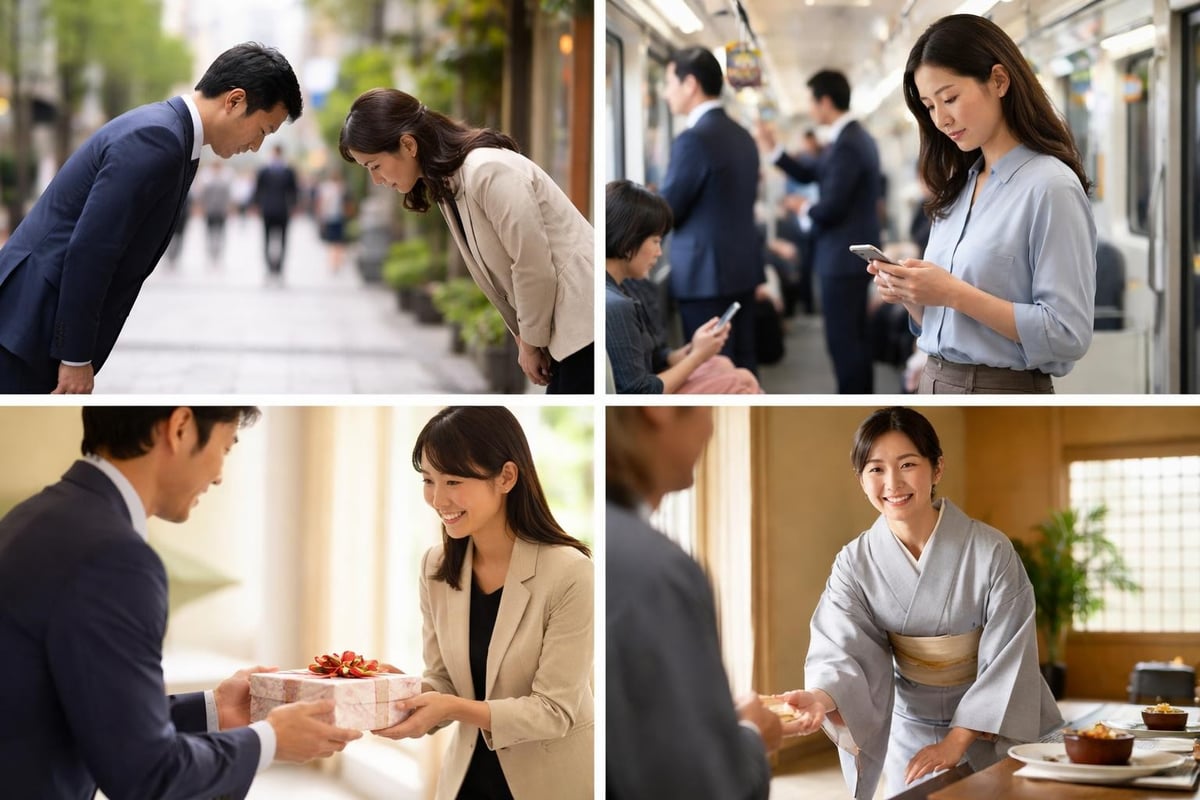
Japanese society values harmony, respect, and consideration for others above nearly everything else. These principles manifest in countless daily interactions that might seem unusual to Western visitors. Bowing serves as the primary greeting method, with the depth and duration of the bow indicating the level of respect being shown. While visitors aren't expected to master every nuance, a slight bow when greeting someone demonstrates your respect for local customs.
Understanding proper etiquette and manners in Japan helps you navigate social situations with confidence. Key practices include:
- Removing shoes when entering homes, certain restaurants, temples, and traditional accommodations
- Speaking quietly in public transportation and restaurants
- Avoiding eating while walking on the street
- Never tipping at restaurants or for services, as it can be considered insulting
- Using both hands when giving or receiving items, especially business cards
The concept of omotenashi, or wholehearted hospitality, permeates Japanese service culture. Staff in hotels, restaurants, and shops take pride in anticipating guest needs before they're expressed, creating an atmosphere of seamless care that often surprises first-time visitors.
Navigating Language Barriers
English proficiency varies significantly across Japan, with major tourist areas in Tokyo, Kyoto, and Osaka offering more English signage and English-speaking staff. However, venturing beyond these hubs often means limited English availability.
Technology bridges most communication gaps effectively:
| Tool | Purpose | Key Benefit |
|---|---|---|
| Google Translate | Real-time conversation and camera translation | Works offline with downloaded language packs |
| Hyperdia | Train route planning | Shows platform numbers and transfer details |
| Japan Official Travel App | Navigation and emergency information | Government-backed accuracy |
| Tabelog | Restaurant recommendations | Shows photos and reviews from locals |
Learning basic Japanese phrases demonstrates respect and often elicits warm responses from locals. Essential phrases include "arigatou gozaimasu" (thank you very much), "sumimasen" (excuse me/sorry), and "eigo ga hanasemasu ka?" (do you speak English?).
Planning Your First Time in Japan Itinerary
Strategic planning maximizes your experience while minimizing stress during your maiden voyage to Japan. The country's efficient infrastructure makes multi-city trips remarkably accessible, but proper pacing prevents burnout.
Choosing the Right Season
Each season offers distinct advantages for your first time in Japan experience. Spring (March to May) brings the famous cherry blossoms, with peak viewing typically occurring in late March to early April in Tokyo and Kyoto. However, this period also brings crowds and premium accommodation pricing.
Summer (June to August) features vibrant festivals and mountain hiking opportunities, though humidity can be intense, particularly in July and August. The rainy season in June brings consistent precipitation but fewer tourists.
Autumn (September to November) rivals spring for visual beauty, with fall foliage creating spectacular landscapes throughout the country. Comfortable temperatures and lower humidity make this season ideal for extensive walking and outdoor exploration.
Winter (December to February) transforms Japan into a winter wonderland, particularly in northern regions like Hokkaido. This season offers excellent skiing, hot spring experiences, and the chance to see a completely different side of Japanese culture.
Essential Destinations for First-Timers
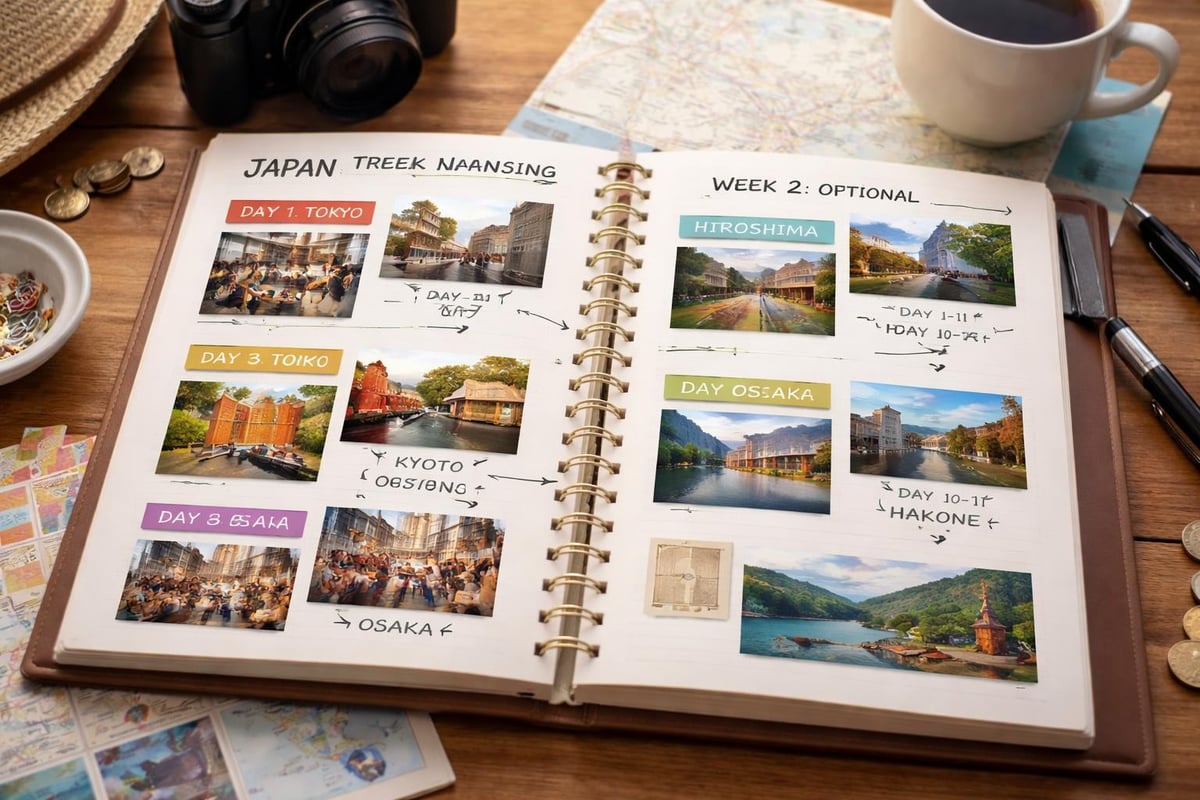
A well-balanced first-time itinerary typically spans 10-14 days and includes a mix of urban energy and traditional culture. Most visitors benefit from focusing on three to four major areas rather than attempting to see everything.
Tokyo serves as the natural entry point for most international travelers. The capital offers an overwhelming array of experiences:
- Shibuya and Harajuku showcase youth culture and cutting-edge fashion
- Asakusa preserves traditional Tokyo around the ancient Senso-ji Temple
- Shinjuku pulses with nightlife, shopping, and the serene Shinjuku Gyoen garden
- Tsukiji Outer Market delivers unparalleled seafood and street food experiences
Kyoto represents the cultural heart of Japan, with over 2,000 temples and shrines scattered throughout the city. The former imperial capital rewards slow exploration, with highlights including Fushimi Inari's thousands of vermilion torii gates, the golden Kinkaku-ji temple, and the atmospheric Gion geisha district.
Osaka brings a different energy, often called "Japan's kitchen" for its exceptional food culture. The city's friendly, outgoing residents create a more relaxed atmosphere compared to Tokyo's intensity.
Mastering Transportation Systems
Japan's transportation network ranks among the world's most efficient, yet its complexity can overwhelm newcomers. Understanding the system before your first time in Japan prevents confusion and saves valuable time.
The Japan Rail Pass Decision
The Japan Rail Pass offers unlimited travel on most JR trains, including the famous Shinkansen bullet trains. However, it only makes financial sense if you plan significant intercity travel.
Calculate whether the pass suits your itinerary:
- List all planned intercity journeys
- Price each journey individually
- Compare the total to the relevant pass duration (7, 14, or 21 days)
- Factor in the convenience of not purchasing individual tickets
A Tokyo-Kyoto-Osaka-Tokyo route typically justifies a 7-day pass. Adding destinations like Hiroshima, Takayama, or Kanazawa makes the pass increasingly valuable. The pass must be purchased before arriving in Japan, though you activate it upon arrival.
Navigating Urban Transit
Tokyo's subway and train network initially appears daunting, with multiple operators and complex route maps. Essential tips for navigating Japan’s train systems help demystify the process for first-time visitors.
IC cards like Suica or Pasmo simplify urban transportation dramatically. These rechargeable smart cards work across almost all trains, subways, and buses throughout Japan. They also function at convenience stores and vending machines, making them incredibly versatile.
Key transportation principles include:
- Trains run with remarkable punctuality, arrive early for intercity journeys
- Priority seating is strictly reserved for elderly and disabled passengers
- Eating and drinking is acceptable on intercity trains but not urban transit
- Phone calls on trains are considered extremely rude, use silent mode
- Follow directional flow patterns when entering and exiting stations
Accommodation Strategies and Cultural Experiences
Where you stay during your first time in Japan significantly shapes your overall experience. Japan offers accommodation ranging from ultra-modern hotels to traditional ryokan inns, each providing unique insights into Japanese life.
Western-Style Hotels vs Traditional Ryokan
Western hotels provide familiar comfort and often include English-speaking staff, making them ideal for portions of your trip when you want convenience and minimal cultural adjustment. Major chains like Hilton, Hyatt, and local brands like Hotel Okura deliver international standards with Japanese precision.
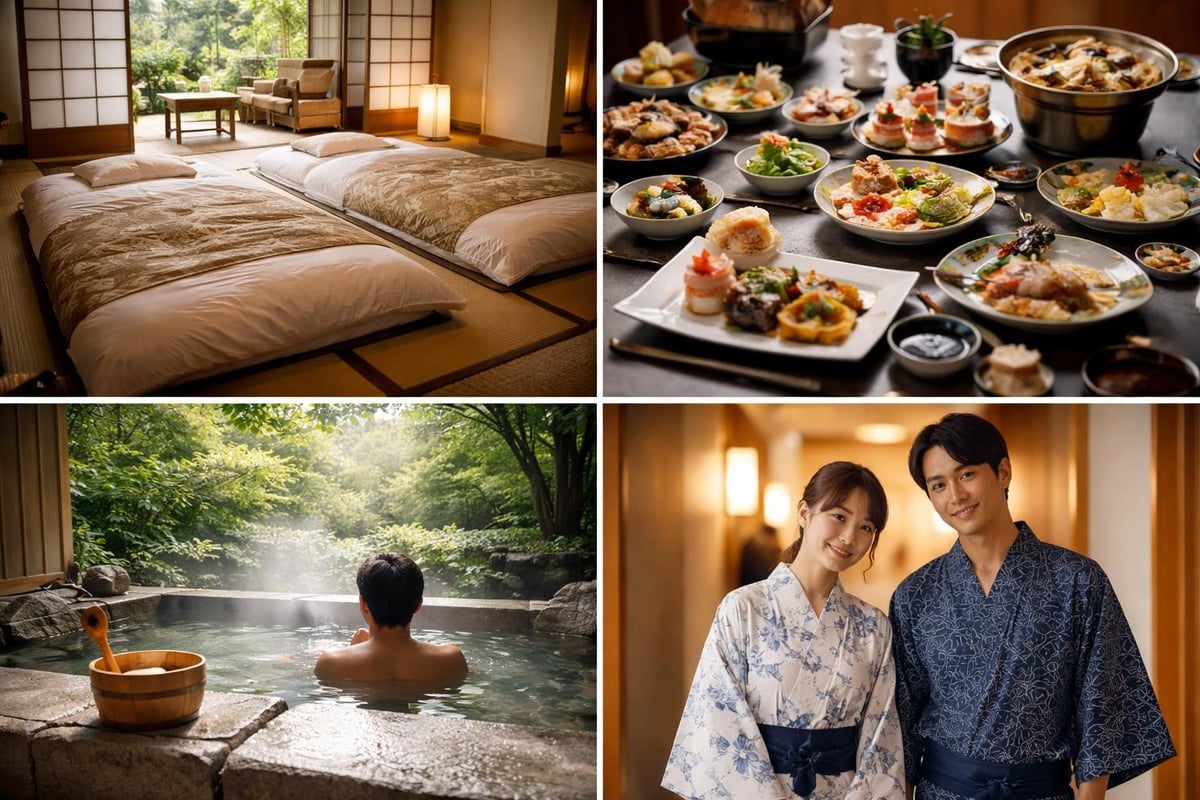
Ryokan represent traditional Japanese inns where you sleep on futon mattresses laid on tatami mat floors, bathe in communal or private onsen hot springs, and typically enjoy elaborate kaiseki dinners. These establishments offer profound cultural immersion but require understanding specific etiquette.
| Accommodation Type | Best For | Average Price Range | Cultural Immersion Level |
|---|---|---|---|
| Business Hotel | Budget-conscious, central locations | $60-120/night | Low |
| Western Luxury Hotel | Comfort, amenities, English support | $200-500+/night | Medium |
| Boutique Hotel | Style, unique locations | $150-350/night | Medium-High |
| Traditional Ryokan | Cultural experience, relaxation | $200-800+/night | Very High |
| Capsule Hotel | Budget, novelty experience | $30-60/night | Medium |
The Onsen Experience
Hot spring bathing represents a quintessential Japanese tradition that many first-time visitors find transformative. However, onsens come with strict protocols that must be followed without exception.
Before entering any onsen:
- Remove all clothing in the changing room, bathing suits are not permitted
- Wash thoroughly at the provided stations before entering the communal bath
- Keep your small towel out of the water, place it on your head or beside the bath
- Enter the water quietly and maintain a peaceful atmosphere
- Dry off before returning to the changing area to avoid dripping water
Tattoos present a challenge at many traditional onsens, as they're historically associated with organized crime in Japan. Some establishments strictly prohibit tattoos, while others accept small ones that can be covered with patches. Research individual onsen policies before visiting, or consider booking private onsen baths that don't enforce these restrictions.
Culinary Adventures and Dining Etiquette
Japanese cuisine extends far beyond sushi and ramen, encompassing regional specialties, seasonal ingredients, and preparation methods refined over centuries. Your first time in Japan should include diverse culinary experiences that reveal the country's food culture depth.
Restaurant Types and Ordering Systems
Different restaurant categories serve specific purposes in Japanese dining culture. Izakayas function as casual gastropubs where small plates accompany drinks, creating a relaxed social atmosphere. Kaiseki restaurants deliver elaborate multi-course meals showcasing seasonal ingredients and artistic presentation. Conveyor belt sushi (kaiten-zushi) offers affordable, accessible sushi experiences perfect for hesitant newcomers.
Many restaurants, particularly chains and casual establishments, use ticket vending machines at the entrance. You select your meal, pay the machine, and present the ticket to staff. This system eliminates language barriers but can be intimidating initially.
Key dining etiquette points include:
- Say "itadakimasu" (I humbly receive) before eating
- Never pass food chopstick-to-chopstick, this mimics funeral rituals
- Slurping noodles is not just acceptable but encouraged
- Finish your rice completely to show appreciation
- Say "gochisousama deshita" (thank you for the meal) when finished
Tipping is never expected and can cause confusion or embarrassment. Service charges are built into prices, and staff take pride in providing excellent service as standard practice. Japanese etiquette tips for first-time travelers emphasize this cultural difference that often surprises Western visitors.
Must-Try Foods Beyond the Obvious
While sushi and ramen rightfully earn attention, numerous other dishes deserve exploration during your inaugural Japanese journey:
- Okonomiyaki: Savory pancakes loaded with vegetables, meat, and seafood, particularly famous in Osaka and Hiroshima
- Tonkatsu: Breaded, deep-fried pork cutlet served with shredded cabbage and tangy sauce
- Yakitori: Grilled chicken skewers in countless variations, perfect with beer at izakayas
- Shabu-shabu: Thinly sliced meat and vegetables cooked in simmering broth at your table
- Takoyaki: Osaka's famous octopus balls, crispy outside and creamy inside
- Kaiseki: Multi-course traditional meal that represents the pinnacle of Japanese culinary art
Convenience stores (konbini) like 7-Eleven, Lawson, and FamilyMart deserve special mention. These establishments offer remarkably high-quality prepared foods, from onigiri rice balls to hot meals, fried chicken, and seasonal treats. They're open 24 hours and provide clean restrooms throughout cities.
Practical Considerations and Safety
Japan consistently ranks among the world's safest countries, with crime rates that allow worry-free exploration even in major cities late at night. However, understanding practical considerations ensures smooth travel during your first time in Japan.
Money and Payment Methods
Japan remains surprisingly cash-dependent despite its technological advancement. While major hotels, department stores, and chain restaurants accept credit cards, many smaller establishments, temples, and local restaurants operate cash-only.
ATM access requires planning because most Japanese bank ATMs don't accept foreign cards. 7-Eleven ATMs and Japan Post Bank ATMs reliably accept international cards and offer English language options. Withdraw larger amounts less frequently to minimize fees.
The Japanese Yen typically trades around 130-150 yen per US dollar as of 2026. Familiarize yourself with coin denominations (1, 5, 10, 50, 100, and 500 yen) and bills (1,000, 2,000, 5,000, and 10,000 yen) before arrival.
Internet Connectivity
Reliable internet access enhances navigation, translation, and communication throughout your trip. Pocket WiFi rental provides unlimited data for multiple devices, making it ideal for families or groups. SIM cards offer a lighter alternative for solo travelers with unlocked phones.
Major airports offer both options upon arrival, though pre-ordering online often provides better rates and guarantees availability. Many accommodations and public spaces offer free WiFi, but it's less ubiquitous than in other developed countries.
Emergency Preparedness
Japan's safety record shouldn't prevent basic emergency preparation. The universal emergency number is 110 for police and 119 for ambulance/fire. Japan Visitor Hotline (050-3816-2787) provides 24-hour English assistance for emergencies.
Natural disasters, particularly earthquakes, occur regularly in Japan. Japan’s safety standards and essential etiquette help visitors understand emergency protocols and cultural expectations during challenging situations.
Earthquake preparedness basics:
- Identify safe spaces in your accommodation away from windows and heavy objects
- Know evacuation routes and assembly points
- Keep your passport and essential items accessible
- Download the Japan Meteorological Agency safety tips app
- Follow instructions from local authorities and hotel staff
Making the Most of Private Tour Services
While independent travel offers flexibility, professional guidance transforms your first time in Japan from enjoyable to extraordinary. Private tour services provide cultural context, language support, and access to experiences that independent travelers might miss.
Custom itineraries adapt to your interests, pace, and energy levels, eliminating the stress of navigation and decision-making. Expert guides share historical context, cultural insights, and local knowledge that deepens your understanding of every temple, garden, and neighborhood you visit.
Private tours prove particularly valuable for:
- Cultural experiences like tea ceremonies, calligraphy, or kimono wearing
- Food tours that navigate language barriers and introduce regional specialties
- Complex destinations with limited English signage or complicated layouts
- Time-constrained trips where efficiency maximizes limited vacation days
- Special interests like photography, architecture, or specific historical periods
Professional tour operators maintain relationships with exclusive venues, traditional craftspeople, and cultural practitioners, opening doors that remain closed to casual visitors. This access creates moments of authentic connection that define truly memorable travel experiences.
Regional Variations Worth Exploring
Japan's regions exhibit distinct personalities shaped by geography, history, and local culture. While major cities attract most first-time visitors, venturing beyond the main tourist circuit reveals different facets of Japanese life.
Kansai Region Contrasts
The Kansai region surrounding Osaka and Kyoto showcases different aspects of Japanese culture within short distances. Nara offers sacred deer roaming freely among ancient temples and the enormous Todai-ji bronze Buddha. Kobe delivers legendary beef and a cosmopolitan port city atmosphere influenced by centuries of international trade.
Day trips from Kyoto reveal hidden gems:
- Fushimi sake brewing district with traditional warehouses and tastings
- Arashiyama bamboo groves and historic temples in western Kyoto
- Uji green tea capital with centuries of cultivation tradition
- Mount Hiei monastery complex offering spiritual retreat and hiking
Northern Adventures
Hokkaido, Japan's northernmost island, presents a completely different climate and culture. Winter transforms the region into a snow sports paradise, while summer offers flower fields, dairy farms, and outdoor adventures without the humidity plaguing southern Japan.
Kanazawa on the west coast preserves Edo-period districts alongside world-class contemporary art museums. The city escaped World War II bombing, maintaining historical architecture that provides windows into feudal Japan.
Shopping Strategies and Souvenirs
Japanese shopping ranges from ultra-modern department stores to traditional craft workshops, each offering unique opportunities to bring home meaningful mementos from your first time in Japan.
Tax-Free Shopping
Foreign visitors can shop tax-free at designated stores by presenting their passport. The consumption tax exemption (10% as of 2026) applies to purchases exceeding 5,000 yen from participating retailers. Look for "Tax-Free" signs or ask at major department stores and electronics retailers.
Popular shopping districts include:
| City | District | Specialty |
|---|---|---|
| Tokyo | Akihabara | Electronics, anime, gaming |
| Tokyo | Ginza | Luxury brands, department stores |
| Tokyo | Shimokitazawa | Vintage clothing, indie shops |
| Kyoto | Nishiki Market | Food, kitchen goods, local products |
| Osaka | Dotonbori | Street food, entertainment, souvenirs |
Meaningful Souvenirs
Generic souvenirs pale compared to items with cultural significance or practical value. Japanese knives from specialty shops represent centuries of blade-making expertise. Ceramics vary dramatically by region, with distinct styles from areas like Arita, Bizen, and Kyoto.
Green tea from source regions like Uji or Shizuoka offers superior quality compared to export versions. Many specialty shops provide tastings and expert guidance for selecting varieties matching your preferences.
Traditional crafts like indigo-dyed textiles, lacquerware, or handmade paper (washi) support artisan communities preserving cultural heritage. These items carry stories and craftsmanship that mass-produced souvenirs cannot match.
Digital Tools and Apps
Technology smooths many challenges during your first time in Japan when wielded effectively. Beyond translation and navigation apps mentioned earlier, specialized tools enhance specific aspects of travel.
HyperDia remains the gold standard for train routing, showing exact platform numbers, train car positions, and transfer times. The app works offline once routes are downloaded, making it invaluable during travel days.
Tabelog serves as Japan's primary restaurant review platform, more reliable than international alternatives for finding authentic local establishments. The app shows photos, menus, and reviews from Japanese diners, though an understanding of the rating system helps interpretation.
Google Maps works exceptionally well in Japan, with accurate transit directions, walking routes, and business hours. Download offline maps for major cities before arrival to conserve data and ensure continuous access.
Your first time in Japan represents the beginning of a relationship with a country that rewards curiosity, respect, and openness to new experiences. The preparation, cultural awareness, and strategic planning outlined here create foundations for travel that transcends typical tourism, offering genuine connection with Japanese culture and people. Whether you seek the efficiency of modern cities, the tranquility of ancient temples, or the warmth of traditional hospitality, TOURJAPAN specializes in crafting bespoke journeys that transform first-time visitors into lifelong Japan enthusiasts through personalized itineraries and expert cultural guidance.


